Legacy ModernizationServices & Consulting
Transform aging systems into adaptable platforms, without stopping your business.
Your systems weren't built for today's architecture, delivery expectations, or AI-enabled future. You know they need to go. You can't put the business on pause to replace them. nvisia's legacy modernization services leverage AI-accelerated discovery and 35 years of architectural discipline to modernize systems that are ready for what comes next — without the big-bang risk.
Schedule a Diagnostic Conversation
By the Numbers
Two phases. One clear principle.
Confidence before commitment. Every stage produces something real before the next decision.
nvisia's approach runs in two phases. The first builds the confidence your team needs to commit to the second. We've been doing this work for 35 years. The AI is new. The architectural discipline that determines whether these programs succeed is not.
Diagnose & Envision
Discovery — top-down reimaginingWe run three parallel discovery tracks simultaneously. Technical, experience, and delivery realities of a system are not separable problems — the relationship between them is what the architecture has to account for.
-
Technical Discovery
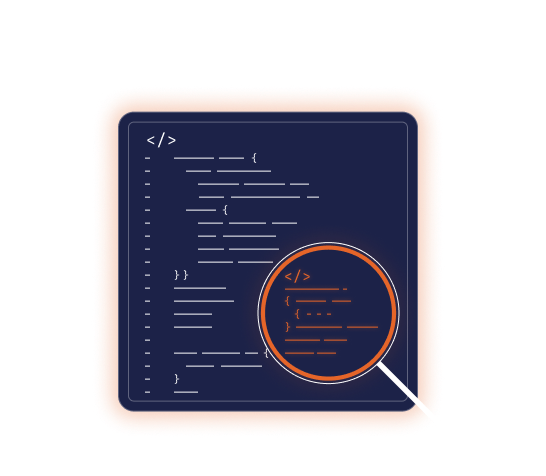
AI-assisted code inspection using Sherlock, our codebase analysis capability. Dependency mapping, requirement surfacing, and technical debt identification — in your environment, in days rather than months.
-
Experience Discovery
A rigorous picture of how users actually interact with your system — not how the documentation says they do. Journey mapping, task analysis, and the offline workarounds that reveal what a straight conversion would miss.
-
Delivery Discovery
How work actually flows at your organization: ownership, artifacts, governance, team structure. A modernized system lands in a delivery environment. We design for the one that actually exists.
Phase 1 ends with a decision-enablement package — the architectural blueprint, modernization roadmap, risk profile, and AI readiness assessment your team needs to say yes or no to Phase 2 with full information.
Transform & Enable
Build — bottom-up executionPhase 2 executes the program Phase 1 designed. Senior architects and AI work in defined roles: AI accelerates specific execution tasks — code generation, scaffolding, testing — while architects hold the structural decisions that determine whether the program holds up.
-
AI embedded in execution.
Not layered on top. We're specific about where AI belongs and where it doesn't — because generalist AI-in-process approaches tend to automate migration, not modernization.
-
Built for managed uncertainty.
New complexity surfaces throughout any modernization program. Our programs are structured to absorb it, not declare scope change. Changing requirements and estimates are addressed transparently — not managed around.
-
The engagement ends when your team owns it.
We establish the architectural framework and AI literacy for your IT team to carry this work forward without re-engaging a vendor. The system is AI-ready. So is the team.
How It Works
Our legacy modernization services follow a three-phase approach that reduces uncertainty, accelerates discovery, and keeps business operations running throughout. AI helps us move faster. Experienced architects ensure we move in the right direction.
AI-Accelerated Discovery
AI-assisted code inspection, dependency mapping, technical debt identification, and workflow analysis provide visibility into the systems you actually have, not just the documentation that describes them. Phase 1 ends with a decision-enablement package: the architectural blueprint, modernization roadmap, risk profile, and AI readiness assessment your team needs to say yes or no to Phase 2 with full information.
- Code inspection
- Dependency mapping
- Technical debt
- Workflow analysis
Decision-enablement package:
the architectural blueprint, modernization roadmap, risk profile, and AI readiness assessment your team needs to say yes or no to Phase 2 with full information.
Architecture Blueprint
Phase 2 executes the program designed in Phase 1. Senior architects and AI work in defined roles: AI accelerates specific execution tasks like code generation, scaffolding, and testing, while architects own the structural decisions that determine whether the program holds up.
- Code generation
- Scaffolding
- Testing
Incremental Migration + Validate & Enable
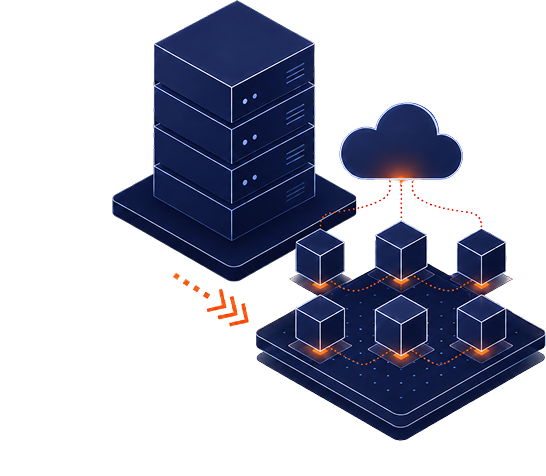
Using strangler-fig, branch-by-abstraction, API-first modernization, and incremental migration patterns, we implement modernized systems while keeping business operations running. Our legacy system migration services combine continuous testing, performance validation, and knowledge transfer to ensure your team can extend the system long after our work is done.
- Strangler Fig
- Branch by Abstraction
- API-first
- Knowledge transfer
Contact Us Today
The architecture conversation is worth having. It starts with one hour and a senior architect — no deck, no pitch, just your system and our questions.
If you're comparing legacy modernization services or looking for a software modernization company that can help reduce big-bang risk, this is the place to start.
Why nvisia for Legacy Modernization
We've been inside the systems AI has to touch
35 years across every major technology shift: client/server, Java, cloud, and now AI. We know where AI helps and where it doesn't, because we've already modernized the systems it needs to operate on. That's a different kind of credibility than having studied it.
Architecture is not an afterthought
We're not advisors who hand off a strategy document and step back. As a software modernization company, we design the architecture and we build it. We know what it actually takes to follow the roadmap we hand you, because we're the ones doing it.

No big-bang risk
Incremental delivery using proven patterns — Strangler Fig, Branch by Abstraction — means the business operates throughout. Every engagement ends with your team owning the architecture, not depending on a vendor to maintain it.
Meet the Capability That Makes Discovery Different
Sherlock analyzes legacy code in your environment. It surfaces requirements, maps dependencies, and identifies complexity that traditional discovery either misses or takes months to find. For legacy system migration services, that kind of visibility matters before any roadmap, refactor, or migration path gets treated as real.
Sherlock addresses speed. It can also retirement-proof your system. One day, the experts on your system could leave, taking their knowledge with them. Sherlock addresses that risk by recovering their knowledge from the code.
Schedule a Diagnostic ConversationFeatured Clients
-
Harley-Davidson
-
Northwestern Mutual
-
WE Energies

-
FHLBank Chicago
-
Douglas Dynamics
-
West Bend Mutual